Gold Purity – Why It Matters for Retirement Investors
Gold Purity – Why It Matters for Retirement Investors

Most American retirement investors are surprised to learn that not all gold is created equal. Purity levels can dramatically change the value and durability of your holdings, making gold selection more complex than many expect. Over 90% of investment-grade gold in the United States meets strict purity standards, yet misconceptions still lead to costly mistakes. Understanding how karat ratings and fineness systems work will empower you to make informed decisions as you build a resilient, diversified portfolio.
Table of Contents
- Defining Gold Purity And Common Misconceptions
- Karat Vs. Fineness Systems Explained
- Popular Gold Purity Levels And Their Uses
- How Purity Affects Value, Durability, And Investment
- Gold Ira Standards, Taxes, And Mistakes To Avoid
Key Takeaways
| Point | Details |
|---|---|
| Understanding Gold Purity is Essential | Gold purity is measured in karats or percentages, with 24 karat being 100% pure gold. Knowing this helps investors assess gold’s value as part of their strategy. |
| Karat vs. Fineness Systems | The karat system is used in the U.S. and UK, while the fineness system is common in Europe. Understanding both is crucial for evaluating gold content worldwide. |
| Lower Karat Ratings Are Valuable | Lower karat gold may offer durability and practicality without significantly diminishing value. Investors should recognize their intrinsic worth tied to weight and market price. |
| Avoid Common Mistakes with Gold IRAs | Retirement investors must understand IRS regulations and avoid non-compliant investments. Proper selection and documentation are key to maximizing Gold IRA potential. |
Defining Gold Purity and Common Misconceptions
Gold purity represents the proportion of pure gold in an alloy, measured in karats or percentages. A karat rating indicates how much genuine gold is present in a metal composition, with 24 karat representing 100% pure gold. Understanding this fundamental concept is critical for retirement investors considering gold as part of their investment strategy.
Pure gold, while chemically fascinating, is actually quite impractical for most applications. Gold’s inherent properties demonstrate why metallurgists and jewelers rarely use 24 karat gold. The metal is extraordinarily soft and malleable, meaning it scratches easily and deforms under minimal pressure. This vulnerability makes pure gold unsuitable for jewelry, coins, or investment-grade bars that must maintain structural integrity.
To enhance durability, gold is typically alloyed with other metals like copper, silver, and zinc. These additional metals create stronger compositions while modifying the gold’s color and physical characteristics. Common gold purities include:
- 24 karat: 99.9% pure gold
- 22 karat: 91.7% pure gold
- 18 karat: 75% pure gold
- 14 karat: 58.3% pure gold
- 10 karat: 41.7% pure gold
Retirement investors should recognize that lower karat ratings do not necessarily diminish gold’s value as an investment vehicle. The metal’s intrinsic worth remains tied to its weight and market pricing, regardless of purity level.
Pro tip: When evaluating gold investments, always request certification of gold purity from a reputable assay office to ensure accurate karat classification and investment quality.
Karat vs. Fineness Systems Explained
Investors navigating the gold market must understand two primary methods of measuring gold purity: the karat system and the fineness system. These measurement approaches help determine the precise quantity of pure gold in an alloy, which is crucial for making informed investment decisions. Precious metal purity standards vary across different global markets, making it essential to comprehend these measurement techniques.
The karat system, predominantly used in the United States and United Kingdom, measures gold purity by dividing 24 total parts. Pure gold is represented as 24 karats, meaning all 24 parts are gold. For instance, 18 karat gold contains 18 parts gold and 6 parts other metals, representing 75% pure gold. In contrast, the fineness system, more common in European countries, expresses gold purity in parts per thousand. This means an 18 karat gold piece would be stamped as 750 fineness, directly indicating its 75% gold composition.
To help retirement investors understand these systems, here’s a comparative breakdown:
- 24 karat = 24/24 pure gold = 1000 fineness (100% gold)
- 22 karat = 22/24 pure gold = 916 fineness (91.6% gold)
- 18 karat = 18/24 pure gold = 750 fineness (75% gold)
- 14 karat = 14/24 pure gold = 585 fineness (58.3% gold)
- 10 karat = 10/24 pure gold = 416 fineness (41.7% gold)
Gold jewelry standards indicate that these systems evolved to provide transparency in precious metal transactions. Understanding both measurement methods allows investors to accurately assess gold content and value across different international markets.
Pro tip: Always request both karat and fineness ratings when purchasing gold investments to ensure complete understanding of the metal’s composition and value.
Popular Gold Purity Levels and Their Uses
Retirement investors must understand the nuanced world of gold purity levels, which range from minimally pure to almost entirely gold. Gold purity categories reveal a complex landscape of composition, durability, and investment potential. Each purity level offers unique characteristics that impact its practical and financial value.
The most common gold purity levels span from 9 karats to 24 karats, with each tier representing a different percentage of pure gold content. Lower karat ratings like 9k and 10k contain less pure gold but offer increased durability, making them suitable for everyday jewelry. In contrast, higher purity levels like 18k and 22k provide a more substantial gold content while maintaining reasonable structural integrity. Pure 24k gold remains the pinnacle of gold content but remains too soft for most practical applications.
Here’s a comprehensive breakdown of gold purity levels and their typical uses:
-
9k (37.5% gold): Least expensive, most durable
- Ideal for costume jewelry
- Lowest gold content among investment metals
-
10k (41.7% gold): Standard for affordable jewelry
- Resistant to scratching
- Popular in budget-friendly accessories
-
14k (58.3% gold): Most popular jewelry standard
- Balanced between purity and durability
- Preferred for engagement rings and fine jewelry
-
18k (75% gold): High-end jewelry
- Rich gold color
- Used in luxury and designer pieces
-
22k (91.6% gold): Investment and high-value jewelry
- Significant gold content
- Used in collectors’ items and premium jewelry
-
24k (99.99% gold): Pure gold
- Bullion and coin production
- Direct investment vehicles
Gold color variations further demonstrate the complexity of gold composition, with alloy metals like copper, silver, and zinc creating distinctive shades from yellow to rose gold. These variations not only impact appearance but also influence the metal’s overall properties and investment characteristics.
Pro tip: When evaluating gold investments, prioritize understanding the specific purity level and its implications for long-term value retention and potential appreciation.
How Purity Affects Value, Durability, and Investment
Retirement investors must recognize that gold purity profoundly impacts three critical aspects of precious metal investments: economic value, physical durability, and long-term investment potential. Gold’s investment characteristics demonstrate a complex interplay between pure metal content and practical utility that directly influences investment decisions.

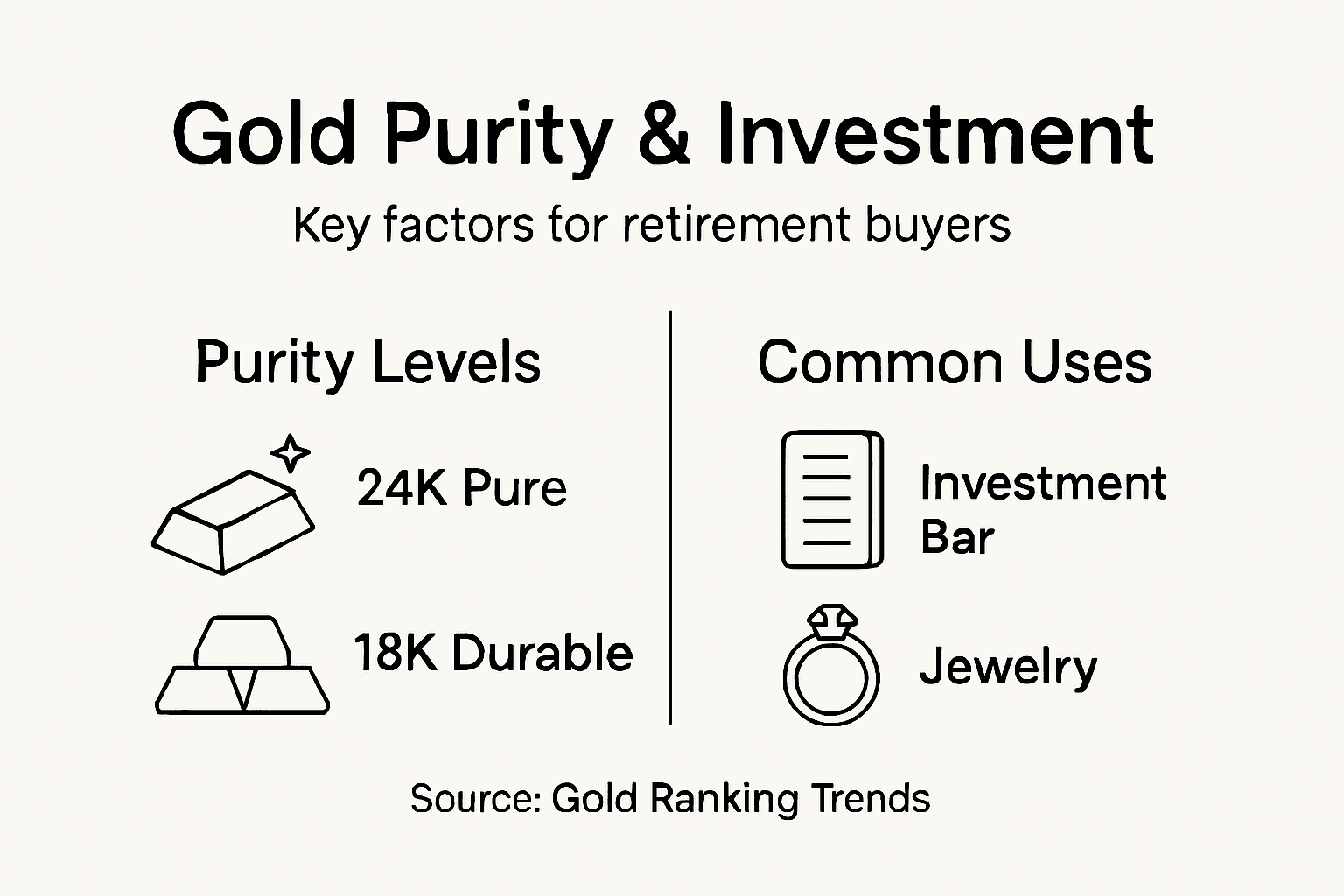
Pure 24 karat gold represents the pinnacle of intrinsic value, containing 99.99% precious metal content. However, this ultimate purity comes with significant trade-offs. The extreme softness of pure gold makes it vulnerable to scratching, bending, and deformation, rendering it impractical for everyday use or investment vehicles that require structural integrity. Alloyed gold, typically ranging from 10 to 18 karats, strikes a strategic balance between value preservation and practical durability. These lower-purity compositions incorporate metals like copper, silver, and zinc to enhance structural strength while maintaining substantial gold content.
The economic implications of gold purity are multifaceted:
-
Pure Gold (24k)
- Highest intrinsic value per weight
- Most vulnerable to physical damage
- Ideal for bullion and collector investments
-
High Purity Gold (18-22k)
- Significant gold content
- Improved durability
- Preferred for high-end jewelry and investment pieces
-
Moderate Purity Gold (14k)
- Balanced value and strength
- Most versatile for jewelry and consumer goods
- Attractive to budget-conscious investors
-
Lower Purity Gold (9-10k)
- Lowest gold content
- Maximum durability
- Most affordable option
Gold’s market dynamics reveal that purity directly influences both aesthetic appeal and economic considerations. Investors must evaluate not just the gold content, but the potential for long-term value appreciation, market liquidity, and the metal’s ability to serve as a reliable store of wealth.
Here’s a quick reference guide to how gold purity levels impact investment characteristics:
| Purity Level | Durability | Typical Use | Liquidity Potential |
|---|---|---|---|
| 24 karat | Very soft | Bullion, coins | Highest in global markets |
| 18-22 karat | Durable | Fine jewelry, investment pieces | High among jewelry buyers |
| 14 karat | Highly durable | Everyday jewelry | Good, especially in U.S. |
| 9-10 karat | Extremely durable | Budget accessories, daily wear | Lower due to less gold content |
Pro tip: When evaluating gold investments, consider the delicate balance between purity, durability, and market value rather than focusing exclusively on gold content.
Gold IRA Standards, Taxes, and Mistakes to Avoid
Retirement investors must navigate a complex landscape of regulations and potential pitfalls when establishing a Gold IRA. IRA retirement plan regulations establish critical guidelines that directly impact investment strategies and potential tax consequences. Understanding these standards is crucial for maintaining compliance and maximizing retirement savings potential.
Gold IRAs operate under specific Internal Revenue Service (IRS) rules that differ significantly from traditional retirement accounts. Investors must adhere to strict purity standards, with acceptable gold investments limited to coins and bullion meeting 99.5% purity requirements. Collectible gold items are strictly prohibited, making it essential to work with reputable custodians who can verify metal authenticity and compliance. Potential tax implications include penalties for early withdrawals before age 59½, with exceptions requiring careful documentation and strategic planning.
Common mistakes retirement investors must avoid include:
-
Improper Metal Selection
- Purchasing collectible or non-qualifying gold
- Ignoring IRS-mandated purity standards
- Selecting unapproved gold products
-
Custodial Errors
- Choosing unqualified IRA custodians
- Failing to maintain proper account documentation
- Overlooking storage and transfer requirements
-
Tax Compliance Issues
- Making unauthorized early withdrawals
- Misunderstanding contribution limits
- Failing to report distributions correctly
-
Investment Strategy Mistakes
- Overlooking diversification
- Concentrating too heavily in gold
- Ignoring market volatility and long-term trends
Tax considerations are particularly complex for Gold IRAs. Investors must carefully track contributions, understand distribution rules, and maintain meticulous records to avoid potential penalties. The IRS imposes strict guidelines on retirement account management, with significant financial consequences for non-compliance.
Below is a summary of common mistakes and how to avoid them when investing in Gold IRAs:
| Mistake Type | Example Error | How to Avoid |
|---|---|---|
| Metal Selection | Buying non-qualifying coins | Verify IRS-approved list |
| Custodial Oversight | Choosing unqualified custodians | Research firm credentials |
| Tax Missteps | Early withdrawals without planning | Consult a tax professional |
| Lack of Diversification | Investing solely in gold | Balance with other assets |
Pro tip: Consult a qualified tax professional or retirement planning specialist to ensure complete compliance and optimize your Gold IRA investment strategy.
Secure Your Retirement with Trusted Gold Purity Insights and Top-Ranked Gold IRA Providers
Understanding gold purity is essential for retirement investors who want to make smart, lasting investment choices. The article highlights key challenges such as navigating karat and fineness systems, balancing durability with value, and meeting strict Gold IRA standards. If you are aiming to protect and grow your retirement savings with reliable gold investments, you need guidance that connects these complex concepts with trustworthy companies who meet rigorous quality and compliance standards.
The good news is you do not have to navigate this alone. At Gold Ranking Trends, we provide detailed rankings and reviews of top precious metals companies specializing in Gold IRA investments. Our platform offers you:
- Up-to-date profiles emphasizing purity certifications and product transparency
- Trust indicators like BBB ratings and Trustpilot scores that give you confidence
- Expert-backed educational content that demystifies investment jargon like karat and fineness

Take control of your retirement planning today by visiting Gold Ranking Trends to compare the best gold investment companies that guarantee value and compliance. Don’t let confusion over gold purity slow your path to a secure future. Explore our landing page now and request your free gold investment kit and assessment. Your informed gold IRA investment journey starts here.
Frequently Asked Questions
What is gold purity and how is it measured?
Gold purity represents the proportion of pure gold in an alloy, measured in karats or percentages. The karat system divides gold into 24 parts, with 24 karats indicating 100% pure gold. The fineness system expresses purity in parts per thousand, such as 750 for 18 karat gold, which indicates 75% pure gold.
Why is gold purity important for retirement investors?
Understanding gold purity is crucial for retirement investors as it directly impacts the metal’s value, durability, and investment potential. Higher purity levels typically have greater intrinsic value but may be less durable. Assessing purity helps investors make informed decisions regarding their gold investments.
How do karat and fineness systems differ?
The karat system is commonly used in the U.S. and the U.K. and measures gold purity in 24 parts, while the fineness system, often used in Europe, expresses purity in parts per thousand. For example, 18 karat gold is 75% pure, represented as 750 fineness in the fineness system.
What mistakes should retirement investors avoid regarding gold purity?
Common mistakes include purchasing non-qualifying gold that does not meet IRS purity standards for Gold IRAs, choosing unqualified custodians, and failing to understand contribution limits and distribution rules. Educating yourself and consulting professionals can help you avoid these pitfalls.