Why Choose Precious Metals IRA for Retirement
Why Choose Precious Metals IRA for Retirement

Many American retirees are discovering that over 15 percent have already diversified their savings with physical gold and other precious metals. As uncertainty grows around traditional financial markets, more conservative investors look for stable assets they can trust. Understanding how a Precious Metals IRA works can help American families protect their nest eggs and gain peace of mind about long-term financial security.
Table of Contents
- What Is A Precious Metals IRA Account?
- Types Of Precious Metals IRA And Assets Allowed
- How Precious Metals IRAs Work For Retirement
- Key IRS Regulations And Custodian Responsibilities
- Risks, Fees, And Common Pitfalls For Investors
- Comparing Precious Metals IRAs To Traditional IRAs
Key Takeaways
| Point | Details |
|---|---|
| Precious Metals IRA Overview | A Precious Metals IRA allows investors to hold physical gold, silver, platinum, and palladium, providing a hedge against economic uncertainties. |
| IRS Regulations and Custodian Role | Precious Metals IRAs must be managed by qualified custodians who ensure compliance with IRS regulations and handle secure storage of assets. |
| Investment Risks and Costs | Investors should be aware of price volatility, setup and storage fees, and the potential for fraudulent practices in the precious metals market. |
| Comparative Benefits | Unlike traditional IRAs, Precious Metals IRAs offer tangible assets that can diversify portfolios but involve more complex management and logistics. |
What Is a Precious Metals IRA Account?
A Precious Metals IRA represents a unique individual retirement account that allows investors to hold physical gold, silver, platinum, and palladium instead of traditional paper assets. Unlike conventional retirement accounts, these self-directed investment vehicles provide a tangible way to diversify retirement portfolios and protect against economic uncertainties.
The core distinction of a Precious Metals IRA lies in its ability to hold physical bullion and coins approved by the IRS. These accounts operate similarly to traditional IRAs but offer investors the opportunity to include physical precious metals as part of their retirement strategy. Typically managed by specialized custodians, these accounts enable individuals to purchase and store IRS-approved metals like gold bars, silver coins, and platinum rounds within a tax-advantaged retirement framework.
Precious Metals IRAs come in two primary structures: Traditional and Roth. In a Traditional Precious Metals IRA, contributions are made with pre-tax dollars, and taxes are paid upon withdrawal during retirement. Conversely, a Roth Precious Metals IRA involves contributions made with after-tax dollars, allowing for tax-free withdrawals during retirement. The flexibility of these accounts enables investors to hedge against market volatility and inflation by allocating a portion of their retirement savings to physical precious metals.
Pro tip: Before opening a Precious Metals IRA, consult with a financial advisor to understand how these unique retirement accounts can complement your specific investment strategy and long-term financial goals.
Types of Precious Metals IRA and Assets Allowed
Precious Metals IRAs offer investors a diverse range of investment options within a carefully regulated framework. The Taxpayer Relief Act of 1997 established specific guidelines for allowable precious metal investments, creating a structured approach to incorporating these tangible assets into retirement portfolios. The primary metals permitted in these specialized retirement accounts include gold, silver, platinum, and palladium, each subject to stringent IRS purity and quality requirements.
To be eligible for inclusion in a Precious Metals IRA, physical metals must meet exacting standards. Gold must be 99.5% pure, silver must reach 99.9% purity, and platinum and palladium must achieve 99.95% purity. These requirements ensure that only high-quality, investment-grade metals can be held within the account. Investors can choose from various forms of approved metals, including:
- Gold: American Gold Eagle coins, gold bars from approved refiners
- Silver: American Silver Eagle coins, silver bars from recognized manufacturers
- Platinum: American Platinum Eagle coins, platinum bars meeting IRS specifications
- Palladium: Specific palladium bars and coins approved by the IRS
Self-directed IRA custodians administer these accounts, ensuring compliance with complex regulatory requirements. Importantly, collectible coins and non-approved metals are strictly prohibited. Physical metals must be stored in secure, IRS-approved depositories, with investors unable to personally hold or store the physical assets. This regulated storage approach protects the integrity of the retirement investment and ensures proper management of these valuable assets.
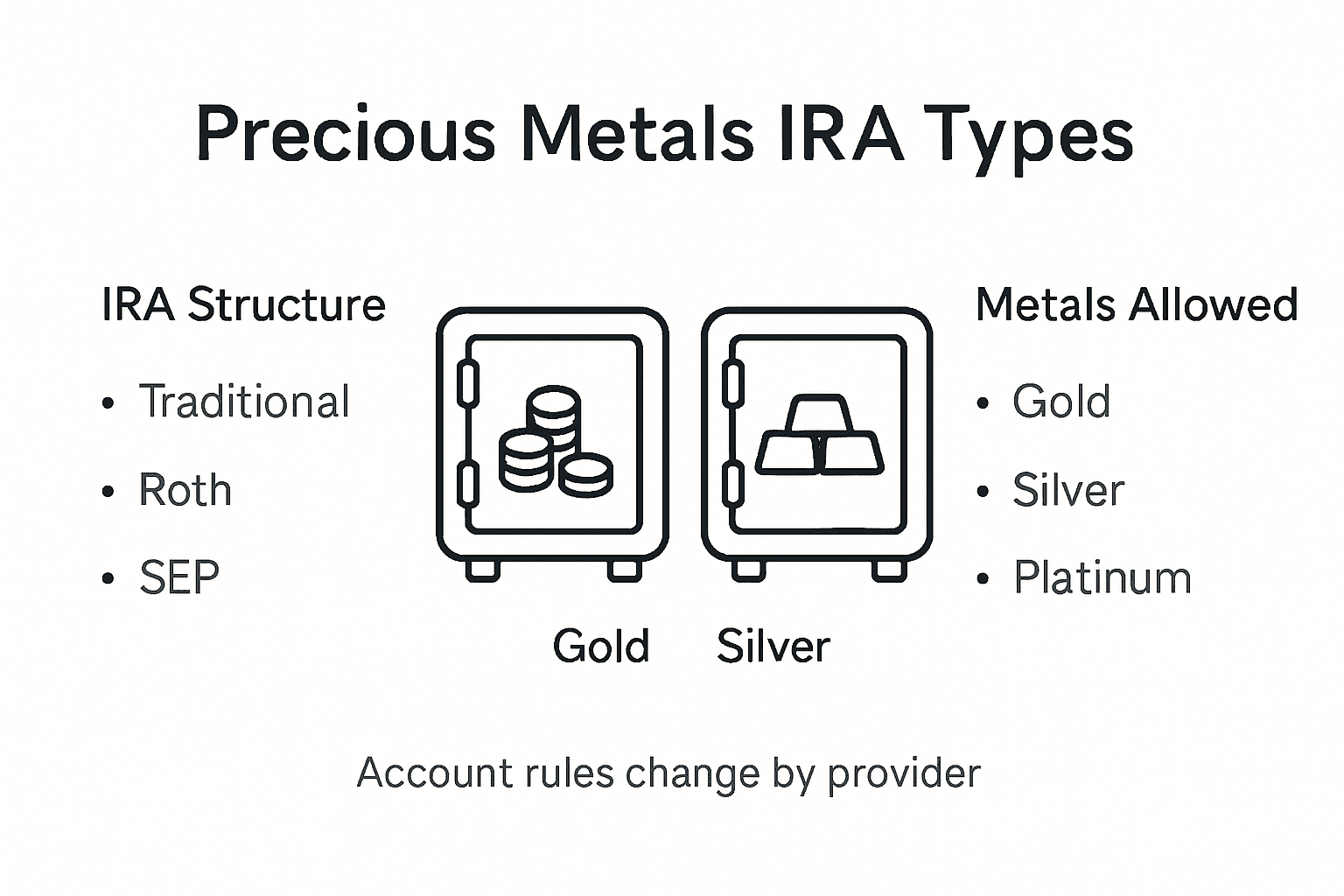
Here’s a summary of types of assets and their IRS purity requirements for Precious Metals IRAs:
| Metal Type | Example Products | IRS Minimum Purity | Storage Requirement |
|---|---|---|---|
| Gold | American Gold Eagle coins, approved bars | 99.5% | IRS-approved depository |
| Silver | American Silver Eagle coins, certified bars | 99.9% | IRS-approved depository |
| Platinum | American Platinum Eagle coins, eligible bars | 99.95% | IRS-approved depository |
| Palladium | IRS-approved coins and bars | 99.95% | IRS-approved depository |
Pro tip: Consult with a specialized precious metals IRA custodian to understand the exact specifications and current approved list of metals before making any investment decisions.
How Precious Metals IRAs Work for Retirement
Precious Metals IRAs operate as specialized self-directed retirement accounts that allow investors to hold physical precious metals as part of their long-term investment strategy. These unique retirement vehicles function differently from traditional IRAs by enabling direct investment in physical gold, silver, platinum, and palladium, providing a tangible alternative to conventional paper-based investments.
The process of establishing a Precious Metals IRA involves several critical steps. Investors must first open a self-directed IRA through an IRS-approved custodian who specializes in alternative asset management. This custodian handles the complex administrative requirements, including:
- Facilitating the rollover of existing retirement funds
- Purchasing approved precious metal products
- Managing secure storage in IRS-approved depositories
- Maintaining necessary tax documentation and compliance records
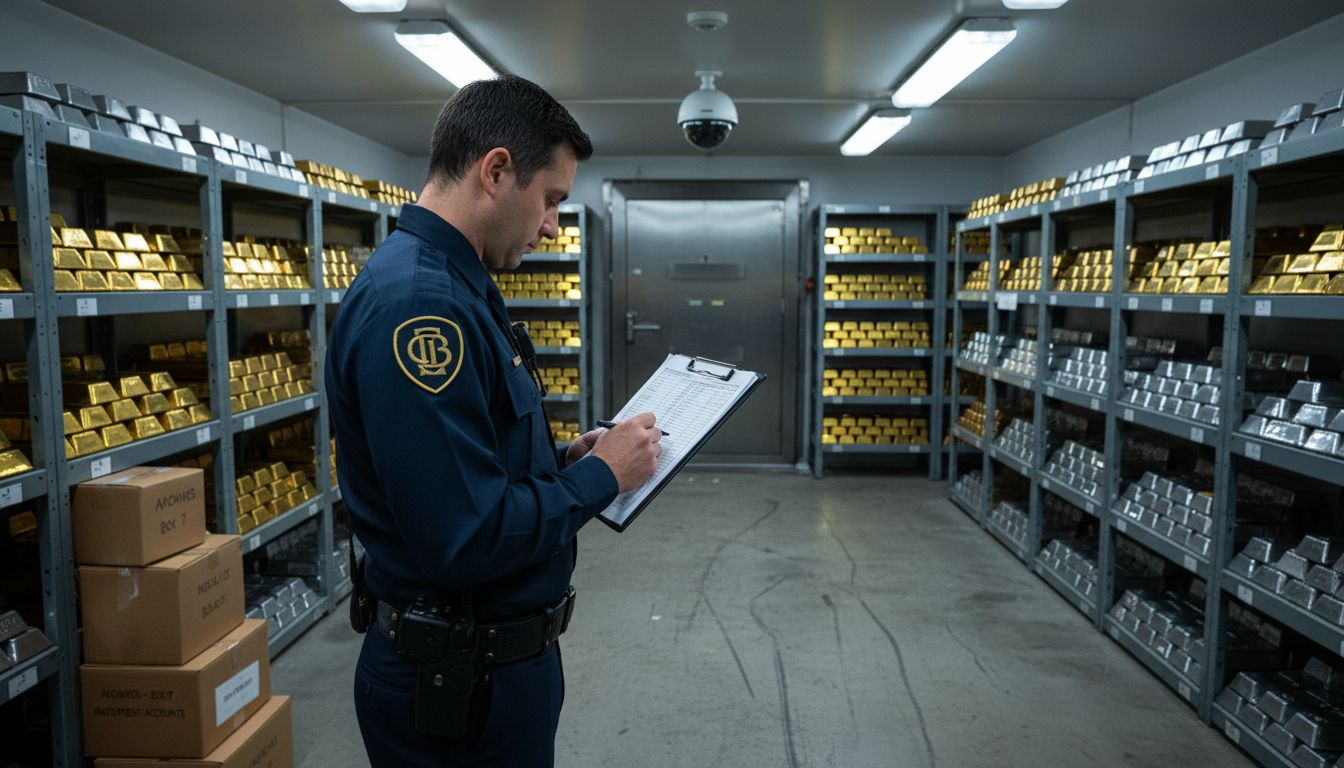
IRS regulations require that all precious metals in these retirement accounts be stored in secure, third-party depositories to maintain the account’s tax-advantaged status. Investors cannot personally store or directly handle the physical metals, which must be held by authorized trustees. The metals are purchased using funds rolled over from existing retirement accounts or through new contributions, allowing investors to diversify their retirement portfolios with physical assets that can potentially hedge against market volatility and inflation.
Pro tip: Research multiple IRS-approved custodians and compare their fees, storage options, and track records before selecting a Precious Metals IRA provider to ensure the best possible management of your retirement investments.
Key IRS Regulations and Custodian Responsibilities
Precious Metals IRAs are subject to stringent regulatory oversight, with the Internal Revenue Service establishing comprehensive guidelines to protect investor interests and maintain the tax-advantaged status of retirement accounts. IRS regulations mandate that all precious metals IRAs be managed by qualified custodians who play a critical role in ensuring compliance and maintaining proper asset management.
The responsibilities of IRA custodians are extensive and carefully defined. These authorized financial institutions must perform several crucial functions:
- Verify and process all account transactions
- Maintain accurate and comprehensive financial records
- File necessary tax reports with the IRS
- Ensure all investments meet strict IRS purity and storage requirements
- Prevent prohibited transactions that could jeopardize the account’s tax status
- Coordinate secure storage of physical precious metals in approved depositories
Self-directed IRA custodians operate as passive administrators, processing transactions as directed by the account owner while rigorously adhering to federal regulatory requirements. Importantly, these custodians do not provide investment advice or perform detailed due diligence on specific investments. Their primary role is to maintain the legal and financial integrity of the retirement account, ensuring that all assets and transactions comply with IRS guidelines.
Pro tip: Always request a detailed explanation of a potential custodian’s compliance procedures and ask for their specific experience with precious metals IRAs to ensure comprehensive regulatory adherence.
Risks, Fees, and Common Pitfalls for Investors
Precious Metals IRAs present unique investment opportunities, but potential investors must carefully navigate a complex landscape of financial risks and potential challenges. Investors face significant risks ranging from price volatility to potential fraudulent sales tactics in the precious metals marketplace, requiring a strategic and well-informed approach to retirement investing.
The financial landscape of Precious Metals IRAs involves several critical cost considerations that can substantially impact long-term investment performance:
- Storage Fees: Annual costs for secure depository storage
- Custodian Administration Fees: Recurring charges for account management
- Transaction Fees: Expenses associated with purchasing and selling metals
- Insurance Costs: Additional protection for physical metal holdings
- Potential Setup Expenses: Initial account establishment charges
Beyond financial considerations, investors must be vigilant about potential pitfalls. Unscrupulous dealers may employ high-pressure sales tactics, misrepresent investment potential, or push investors toward overpriced or questionable metal products. Some common red flags include unsolicited investment offers, promises of guaranteed returns, and aggressive marketing of rare or collectible coins that do not meet IRS investment standards. Investors should conduct thorough due diligence, verify dealer credentials, and understand the complete fee structure before committing to any precious metals investment.
Compare key risks and cost considerations for Precious Metals IRA investors below:
| Consideration | Description | Investor Action |
|---|---|---|
| Price Volatility | Rapid changes in metal value | Monitor market trends regularly |
| Setup & Storage Fees | One-time and annual charges apply | Request fee breakdown and compare providers |
| Regulatory Risks | Non-compliance may lose tax status | Choose experienced, compliant custodians |
| Fraudulent Practices | High-pressure sales or misrepresented products | Verify dealer credentials before investing |
Pro tip: Request a comprehensive fee breakdown from potential custodians and compare multiple providers to ensure you are not overpaying for storage, administration, or transaction services.
Comparing Precious Metals IRAs to Traditional IRAs
Retirement investment strategies vary widely, but the fundamental differences between Precious Metals IRAs and traditional IRAs can significantly impact an investor’s long-term financial planning. Traditional IRAs typically hold financial instruments like stocks, bonds, and mutual funds, while precious metals IRAs offer a unique alternative by allowing physical metal investments.
Key distinctions between these retirement account types include:
- Asset Composition
- Traditional IRA: Paper assets like stocks, bonds
- Precious Metals IRA: Physical gold, silver, platinum, palladium
- Liquidity
- Traditional IRA: Highly liquid, easily traded
- Precious Metals IRA: Less liquid, requires physical metal transactions
- Management Complexity
- Traditional IRA: Simple, straightforward management
- Precious Metals IRA: Requires specialized custodians and storage arrangements
Unlike traditional IRAs, precious metals IRAs provide investors with a tangible asset that can serve as a potential hedge against market volatility and inflation. While both account types offer tax advantages, precious metals IRAs involve more complex logistics, including secure storage requirements and potentially higher administrative fees. The choice between these investment vehicles depends on an individual’s risk tolerance, diversification goals, and long-term financial strategy.
Pro tip: Consider consulting a financial advisor to understand how the unique characteristics of precious metals IRAs might complement your existing retirement portfolio and investment objectives.
Secure Your Retirement with Trusted Precious Metals IRA Providers
Choosing a Precious Metals IRA for retirement can be a powerful way to protect your savings from market volatility and inflation. However, navigating the complexities of custodian fees, IRS regulations, and approved metal types can feel overwhelming. If you want confidence that your investments meet IRS purity standards while avoiding costly pitfalls and high-pressure sales tactics, expert guidance is essential.
Our platform at Gold Ranking Trends simplifies this process by ranking and reviewing the top precious metals companies specializing in Gold IRA investments in 2026. We highlight key factors like customer satisfaction, fee transparency, and trust indicators such as BBB ratings and Trustpilot scores. This ensures you can make informed decisions backed by real-world experience and verified industry performance.

Take control of your retirement planning now and explore detailed company profiles, comparisons, and exclusive offers for free gold investment kits and consultations. Visit Gold Ranking Trends to start building a secure, diversified retirement portfolio with expert-vetted solutions today.
Frequently Asked Questions
What is a Precious Metals IRA?
A Precious Metals IRA is a specialized retirement account that allows investors to hold physical precious metals like gold, silver, platinum, and palladium, providing a tangible way to diversify their retirement portfolios.
What types of metals can be included in a Precious Metals IRA?
Investors can include IRS-approved physical metals such as American Gold Eagle coins, American Silver Eagle coins, and various platinum and palladium products that meet strict purity requirements.
How do Precious Metals IRAs differ from traditional IRAs?
Unlike traditional IRAs that focus on paper assets like stocks and bonds, Precious Metals IRAs hold physical metals. This creates differences in liquidity and management complexity, as Precious Metals IRAs require specialized custodians and storage solutions for the physical assets.
What are the key risks associated with investing in a Precious Metals IRA?
Investors should be aware of risks such as price volatility, higher fees for storage and management, and the potential for fraudulent practices in the precious metals market. It’s important to conduct thorough research and due diligence before investing.